“Starting Year 11” as a home educator is not a reason to panic
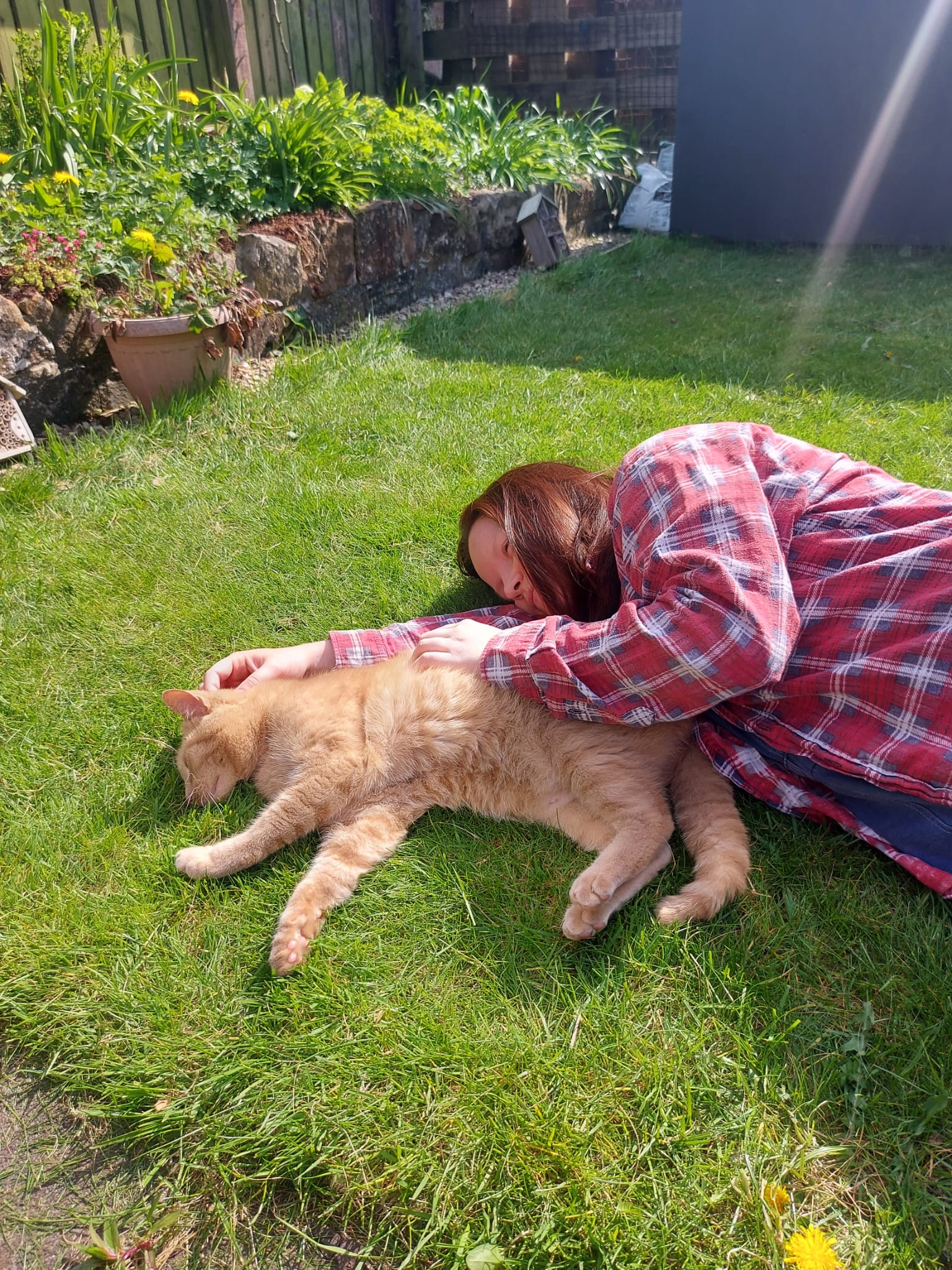
Aug 23, 2026Ok, I get it; I haven’t been in that position myself. My boy will only be 10 later this year, and even when he gets to 15 or 16, his only worry will be his second dinner and chasing string 🐈
So why am I telling you “don’t panic”? Because I’ve seen countless times over the years (decades, even) that performing under stress doesn’t yield the best results.
And you know what? If you home educate, you’re in charge. You or your teen (or both of you) might want to get the exams done at the “usual” time. Sure, nobody’s stopping you. But you actually have the advantage of taking your time. And this is an advantage worth owning.
Because what’s better? What’s going to help your teen feel more confident and happy? And which approach will be a more enjoyable process while working towards those exams?
Option A: Working at your own pace with a clear goal, deciding exams will happen when you’re ready. Studying for the sake of learning, not just passing exams — and then taking exams with ease of mind and head held high.
→ When you feel ready, there’s way less chance the exams won’t go the way you want them to. Because you took them when you knew you could get there.
Option B: Pushing for the “usual timeline” while knowing your knowledge is built on shaky ground (because school wasn’t working for the last 3, 5… how many years? Hence those “gaps” in knowledge). You grind your teeth while wading through endless hours of learning and revision at breakneck speed — only to find yourself at exams that came way faster than you wanted. So you “just do it” and hope for the best. Fingers crossed, sweaty palms.
→ As a result, you can get badly knocked down if it doesn’t work out as you needed or wanted, despite your hard work. Just because time wasn’t on your side.
I mean, yeah, I’m being overly dramatic here in the second part. (Or am I? You tell me… 👀) But for me, the answer is clear. How about you?
If you’re Team A (or want to be), I’ll walk you through what that looks like and how you might want to plan it.
This “breathe and don’t panic” advice for those who find themselves close to the exam age isn’t new; I’ve talked about it so much (and I will continue as long as I see people worried about “Year 11”, “S4”, “the exam year”, “being behind”).
Going forward, I’ll assume you’re reading this because you do want to take the exams eventually. Some home educators decide not to take them at all, which is an equally valid plan. That’s the perk of home education, right? 🙃
So you’re panicking because you (or your teen) want to take the exams, but don’t feel ready when you are “supposed to be ready”. Doesn’t matter who said “let’s do exams.” What matters is knowing that you don’t have to bend over backwards to fit the school timeline. Your teen is out of school, so there are different rules you play by — and many of them are yours to call.
Phew, right? 🙂
Stage, not age — that’s not just a cute little rhyme
When you’re at school, you learn in cohorts. When you home educate, you can (and I’d say should) approach learning as an individual and make it suit you, not the other way around. That doesn’t mean you have to learn alone — you can learn with others, in a group, for example. But it should be about stage, not age. You may have already heard this, and it’s not just a cute rhyme educators say to look cool.
Yeah, I know schools have different sets within a year group; that’s their way of dealing with the logistics of having learners at different stages (but the same age) in one big group that is “supposed to be” moving at the same pace. But frankly, I can’t count how many times people have approached me asking for help because they moved from abroad, been through a different school system, and now their teen is a certain age, so the school is pushing them to a specific year group — while it’s actually not suitable at all. How bizarre is that? And it’s not like the said teenager is behind (or ahead); it’s just how they were learning in their country’s system up until now.
So the flaws of the “age matters” approach within school systems really show how lucky you are if you home educate and can make things work for you. So take that frickin’ advantage then! 😄
Ditch the panic — start asking the right questions
You may have noticed a pattern if you’ve been reading my blog for a while: I tend to spin things around and encourage you to look at issues from a different angle. I won’t disappoint you if you’re waiting for that little spin today 😁
Here we go! The question to ask shouldn’t be: “Are we ready for Y11/S4/whatever level learning?” It should be: “Are we ready for exam work?” and “What timeline will work for us?”
See? It’s about whether you’re ready to start, and how long it will take you to get to a point where you feel confident taking those exams.
Doesn’t that feel way more freeing? Less tense? More empowered? It’s not “Hey-ho, we’re behind, so I guess we take an extra year…” No, no, no! That’s not the best way to look at it.
It’s “Yohoo! We’re in charge, and we’re gonna enjoy the ride!” 😄 Feels better already, right?
Look, I’m not saying working hard and under pressure must be avoided at all costs. But if there are other factors involved, for example, health (both mental and physical), why not take advantage of the thing you CAN easily control, like when your teen actually sits the exams? That way, you can focus on the other, often more pressing, matters instead.
There are plenty of ways and techniques to help when there’s no way around it and you have to conform to the age norm. But that’s for another blog post (and more than one). Today, I simply wanted to (yet again) raise awareness that “Year 11”, “S4”, etc. don’t have to carry the same meaning they do in the school world. Not when you home educate.
You (very likely) chose home education because the school system wasn’t serving your young learner. So why let the school calendar dictate your decisions?
Plenty of options you can choose from
I’ve already hinted at this, but let me say it once again: there are plenty of pathways to the future you want for your teen. Sometimes, GCSEs and other formal exams are just something we think we need. Often I hear people say “just in case”, so “they have options in the future”.
Cool! I’m the last person to tell you not to be academic. I like how learning trains the brain, whether it’s needed for my future options or now. In my case, I was already doing what I do now (helping people with maths) long before I took my own exams, and way before I went to uni. It’s great that I can slap a maths degree on my CV, but I already had a thriving roster of students before I even finished uni. And I still think having qualifications is good. Even though I never really needed mine, truly, in my professional life — nobody and nothing required me to have a degree. But learning is good! I went through uni for the sake of learning. I got my Nat 5 in Scottish Gaelic two years ago simply because I wanted to.
So, being academic is great, and even if it’s not always explicitly needed later in life, it’s still worth the experience. But what kind of experience? That matters too.
I was cracking under the weight of studying for my German exams (foolishly chosen by me as one of my high school exams). That was NOT fun. Nor was it rewarding. And it ruined my overall grades! (Not that I cared deeply, but I wasn’t completely thrilled either, given I had great grades in everything else… grumble, grumble 😤)
If I could choose again, I’d certainly choose a different timeline. I probably wouldn’t take the German exam at all. Or say if I had to (for whatever reason), I’d do that one separately, a year later perhaps, when I could focus solely on all that mad grammar of theirs (Mensch, ey… 🙈). And I’d only register for the exam once I felt confident I could do it — not going there holding on for dear life, hoping for an easy topic like “my family” instead of “the benefits of EU.”
Guess what? My topic was “culture” (yep, one of the easiest things to talk about in any foreign language — music, movies, art...), and I still got a worse grade than I wanted. Just because I wasn’t ready to sit the exam yet.
Why am I talking about my German exams I took almost 20 years ago when you’re panicking about maths right now?
Oh right, because your teen can avoid that experience! If that sounds like a better plan, investigate your options and start thinking about what works for you, not what others say people at your teen’s age should be doing.
The timeline can change; heck, even the exams don’t have to be the ones you’d aim for in school. For GCSE, it’s not only a question of Foundation or Higher tier (you might be surprised, though; it’s not as straightforward which one to choose — but more on that another time). And I’m not even talking about iGCSE right now (with the Edexcel Spec A being very popular as there are just two papers and both with a calculator).
I’m talking about different exams altogether: Functional Skills Level 2 is a very common choice instead of GCSE. Application of Maths is also fairly often taken instead of standard Nat 5 Maths.
Will they be right for your teen? It depends on what they plan to study later. But it’s good to be aware that options exist.
What’s so good about taking your time?
It’s simple. When you take the time you need, you can learn properly. And with maths especially, you take these skills with you, trust me.
I can hear you saying, “I never needed maths in my life.” Well, it’s either that, or you haven’t used it because you couldn’t. I use so many maths skills all the time (nooo, not because that’s literally my job 🤣) — simply because I can, and I’ve trained my brain to use maths wherever it’s useful.
Curious? Don’t believe me? There’s a little miniseries on my blog covering real-life maths, including a few pieces named “What is maths good for? Real life maths story” that you might find interesting. And those are just the tip of the iceberg. I simply don’t have time to write about all my everyday real-life maths stories (partly because I’m obsessed with writing fantasy Maths Stories which live inside Maths Club 👀).
Oh… and taking your time means less exam-induced stress — have I mentioned that already? 😄 Just sayin’ it again, in case you’re only interested in the exam-focused benefits and don’t quite believe me yet that you could be walking through life ninja-solving everyday problems with more maths than you ever imagined.
How to go about planning your learning, then? 5 simple steps
This part is for you if you’re on board with the idea that YOU are in charge, not some artificial school progression construct. (Which, ok, fair enough, suits many, but definitely doesn’t suit everyone.) This is also why I always ask “When do you plan to sit the exams?” not “How old is your learner?” when someone asks me for help.
And with that key question in mind, here’s how to do it:
- You know you want to take exams — but which ones?
Is there a particular pathway, college course, or career you’re aiming for? Look up what’s needed. If it requires a particular exam, pass, or a specific grade, that’s your main goal. - What do you need to know to start studying for it?
Say it’s GCSE — surprise, surprise: you “only” need solid primary maths skills! You don’t need to go through the whole KS3. I can talk about that all day long, but let’s save it for another time. (Writing a “Skipping KS3 maths is totally cool” piece is in my pipeline, so check out my blog later.) - How long does it usually take to study this course?
The official exam syllabus often gives an expected study time needed for exam readiness. That’s your rough guide. But your teen’s learning style matters: some thrive with intense study, while others progress better by spreading the learning out. There’s no right or wrong way. - Adjust your end goal as needed.
You’re already doing things your way (hooray!), so you know nothing is set in stone. You planned the whole thing, and if you see that more time might be needed, so be it. If things are progressing much faster than anticipated, cool! It doesn’t mean that fast learners have to linger around for much longer just because that’s what you decided at the beginning of your study plan. - Reap the reward!
Book your exams sensibly ahead of time once you feel you’re ready. (Late entries are not always possible or can often be more costly; booking about half a year in advance is a good timeline for most exams and gives plenty of time to polish exam techniques and past paper practice.) Then walk in with confidence and smash the exams. Job done 🥳
Sound like a plan? A much better plan than “pushing through the exam year and hoping for the best”? 🙂 I hope so — because this is the path you can take. No more panic needed!
This was supposed to be the end… 👀
…but it’s not. I felt like I showed you a plan, but then sort of left you hanging.
Let me share a few options; you might find some of them useful, depending on where you are on your maths journey and on your way to freedom from those limiting beliefs like “we have to do what others are doing at this age”.
If you simply want to talk, you can meet me and a handful of other home educators like you in a small, informal meeting — no pitch, no webinar, or whatnot — just a friendly chat where you can get your questions about maths and learning answered. I run these when there’s interest. You can hop on the waitlist, and I’ll let you know when the next one is running.
If you’re preparing for iGCSE maths and looking for support, new cohorts in my small online groups start in September. I can help you figure out the best plan and the best group for your young learner. Just book an informal chat with me and let’s have it sorted.
And if you’re done with all the big-picture planning for today, may I intrigue you with something more bite-sized?
How about a little challenge? You and I together encourage your teen to smash ONE maths goal this week.
Whatever they choose, let your learner be in charge. It’ll be more fun — and it won’t interfere with any broader learning plan you have. Au contraire, it gives your teen more power over their learning — which is definitely a good thing. Heck, I’ll walk you through it and even help you pick a goal if you’re unsure. Sound good?
(And btw, this will also satisfy your curiosity in case you were wondering “What is Maths Club?” and “What are Maths Stories?” when I mentioned them earlier 🙃)
>> Give it a go and smash ONE maths goal right this week — here's how. <<
Now, that feels much better. Not only do you have your simple 5-step plan (yep, the one I shared above), but you have further options if you don’t want to do things all by yourself.
I can finally step away from the keyboard and enjoy some garden time with my boy. He always appreciates it. It’s about those little things in life, isn’t it? Neither work nor studies should completely take over our lives 😊